
“Antenna Tuning” – Why It’s Bollocks
Antenna Tuning Versus Antenna Matching
Ok, so that title is a little clickbaity, but I make no apologies. I want to draw attention to another common misconception within amateur radio that confused the hell out of me at first—and if I’m honest, it still kinda does sometimes.
So, what am I talking about? The fact that all these high-end radios that come with “antenna tuners” DO NOT actually tune your antenna! While some of the Elmers out there might think this is a pedantic distinction to make, I think getting an understanding of this earlier rather than later will serve new Hams much better in the long run.
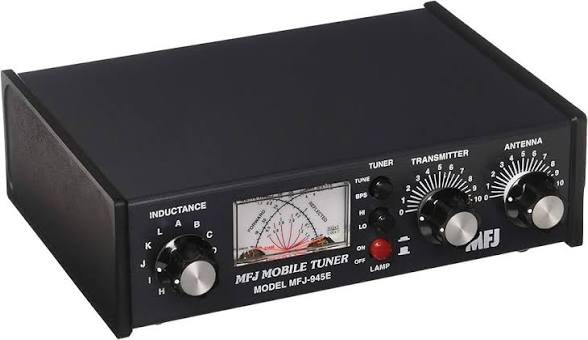
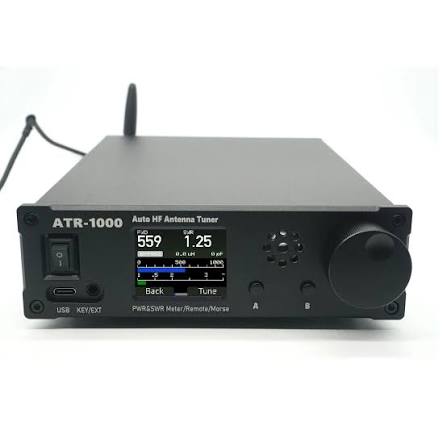
The entire point of this post is to distinguish the difference between these two terms, and why it matters to your station.
- Antenna Tuning: Is the process of changing an antenna’s electrical length to make it resonant on one or more specific frequencies.
- Antenna Matching: Is the process of manipulating your antenna system’s impedance to match the designed ideal impedance of your radio (usually 50 ohms).
Can you guess which one that “antenna tuner” box on your desk or inside your radio actually does? Let help you out: it’s the second one. Despite the name on the front panel, it’s a matcher, not a tuner!
The only way to truly tune an antenna is to change its electrical length. This can be done in a number of ways, from physically adjusting the length of a wire, to using loading coils to make a short antenna look electrically longer to fit the limited space you have. (Things like BalUns and UnUns also jump into the mix here to transform high impedances down to something closer to what your radio expects, before the signal even reaches your coax).
So now we are getting into the meat of the subject. There are two reasons this matters to the average ham operator: Safety and Efficiency. Let’s look at the first one.
Safety
When you are transmitting, you are forcing electrical energy into a piece of wire. This creates all sorts of effects—the main one being emitting the invisible wigglies we all love to wrangle on a day-to-day basis. The others are things like magnetic fields, heat, and high voltage potentials along the length of the wire.
Combine all these together in a poorly matched system, and you can find that instead of radiating out into the airwaves, a portion of that energy gets reflected right back down the feedline towards your rig. This feedback creates voltage standing waves, measured as SWR (Standing Wave Ratio).
If too much voltage reflects back, it can easily let the “blue smoke” out of your radio’s sensitive internal components (specifically the final power amplifiers). Most modern radios can handle a little bit of SWR—usually up to 2.0:1 before they automatically roll back their power to protect themselves—but we generally aim for under 1.5:1 for peace of mind.
Efficiency (And your homework…)
This brings us to the second point: Efficiency.
Let’s look at the math for a safe, typical SWR of 1.5:1. If you are pushing 100 Watts from your radio, an SWR of 1.5:1 means that exactly 4% of your power (4 Watts) is being reflected back. The other 96 Watts is accepted by the system.
4% sounds like almost nothing, right? And your internal “tuner” (matcher) can easily trick your radio into seeing a perfect 1.0:1 anyway.
Here is my question for you: If your radio’s matching unit fixes the SWR at the radio end, what is actually happening to those reflected waves travelling back and forth along your coaxial cable? If your antenna isn’t truly tuned (resonant), where is that “matched” power actually going? Is it actually making it out into the ether as invisible wigglies, or are you just efficiently heating up your coax and matching box?
Have a look into feedline loss and mismatch loss, and let me know what you find in the comments!
While tuning and matching are entirely separate concepts, they often work hand-in-hand to form a complete, optimized antenna system. True antenna tuning happens out at the wire itself—getting the physical elements as close to resonance as possible for maximum radiation efficiency. Antenna matching then steps in to handle the remaining real-world variables, clean up minor mismatches across an operating band, and keep your transmitter happy.
However, keeping the distinction clear is vital for every operator: a matching unit can instantly trick your radio into seeing a perfect 50-ohm load, but it cannot fix a fundamentally inefficient, untuned antenna. Understanding the difference prevents you from falling into the trap of believing a low SWR meter on your desk automatically means your signal is actually making it out into the ether.
73 de M7KQX